
Table of Contents
This 2026 NASAA Approved Ethics IAR CE class begins with a practical question for investment advisers: Are today's regulatory changes part of a familiar cycle, or do new financial wrappers create risks that old labels no longer capture? Andrew Gluck explores that question with securities lawyer Tyler Gellasch, cofounder of Healthy Markets Association and a former Senate staffer who helped draft parts of the Dodd-Frank Act.
Learning objectives covered in this article
- Place July 2026's regulatory shift in historical context.
- Detect hidden leverage and concentrated exposure using Archegos warning signs.
- Evaluate tokenized securities for ownership, custody, manipulation, and insolvency risks.
The discussion links three developments that advisers should evaluate together: the recurring political swing between regulation and deregulation, the hidden leverage exposed by the Archegos collapse, and the rapid movement toward tokenized stocks and other securities-like products. The course material turns those developments into a fiduciary framework for recognizing economic exposure even when the product name, trading venue, or supervising regulator changes.
Earn continuing-education credit for the complete class
Get the full 50-minute course, all ten learning-objective sections, review exercise, assessment, and completion certificate.
Enroll in the class for credit2026 NASAA Approved Ethics IAR CE: Why This Regulatory Shift Matters
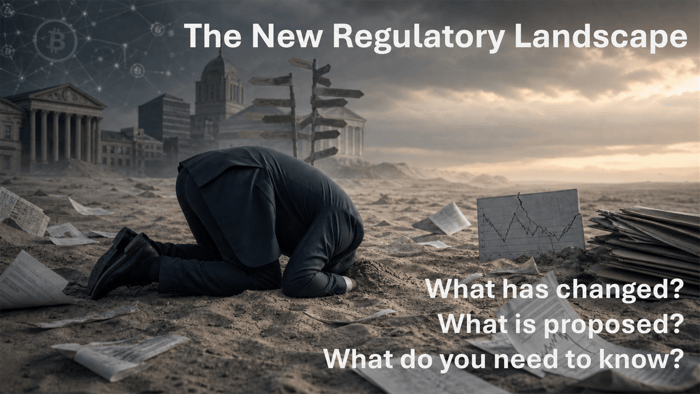
Financial regulation often follows a recognizable rhythm. A crisis exposes weaknesses, lawmakers respond with new protections, and memories fade during the calmer years that follow. Rules are then criticized as barriers to innovation or capital formation. The 2026 NASAA Approved Ethics IAR CE discussion places July 2026 in that historical pattern, while also explaining why the current moment may be different in scope.
After the 1929 crash, Congress adopted the federal securities laws. After the 2008 financial crisis, Congress enacted Dodd-Frank and established a more detailed framework for swaps, leverage, trading, and institutional risk. Each response addressed conduct that had produced visible harm. Yet Gellasch warns that financial memory can be short. People who later interpret a law may not have participated in the crisis, the negotiations, or the decisions that produced it.
That loss of institutional memory can begin almost immediately. Gellasch describes returning to the SEC only a few years after helping write provisions of the JOBS Act and encountering officials who interpreted language differently from the staff members who negotiated and drafted it. His point is not that every later interpretation is wrong. It is that the purpose of a safeguard can become harder to see once the crisis, legislative bargaining, and implementation debates disappear from daily experience.
The same pattern can occur politically. Dodd-Frank followed the global financial crisis, but the deregulatory response began quickly as lawmakers and market participants again emphasized capital formation and innovation. That tension is normal in American financial policy. The fiduciary problem arises when a product is evaluated only through the prevailing political label. Advisers need a longer memory than the market cycle: what loss was the rule designed to prevent, what conduct does the new product reproduce, and which party bears the risk if an older protection is removed?
The unusual feature of today's landscape is not simply deregulation. It is the creation of multiple products that can reproduce the economics of a stock while being described as something else. A stock token, perpetual future, prediction contract, or equity swap may deliver a return linked to the same company, but each wrapper can be routed through a different legal framework. Advisers therefore need to look past labels and identify the actual exposure, ownership rights, leverage, liquidity, custody, and failure path.
This proliferation creates what the class calls “one market, many rulebooks.” A conventional share, a security-based swap, a token linked to a share, and a perpetual contract may all rise or fall with the same issuer. But reporting, margin, trading, custody, solicitation, and best-execution requirements may differ. The client experiences a familiar economic result while the legal protections change underneath it. That mismatch is why product comparison should start with economic substance and then map the applicable rules.
Question
Why does this Ethics IAR CE class begin with regulatory history?
History helps advisers recognize recurring patterns. Crises produce safeguards, calm periods weaken institutional memory, and new product labels can revive familiar risks. Understanding that cycle makes it easier to identify when an apparently innovative product recreates an old economic exposure.
For fiduciaries, the ethical point is direct: the absence of a familiar rule does not eliminate the duty to understand the client's risk. The 2026 NASAA Approved Ethics IAR CE class asks advisers to document the economics first and the regulatory label second. That order reduces the chance that a novel wrapper will receive less scrutiny merely because it falls between agencies or outside a traditional product category.
2026 NASAA Approved Ethics IAR CE: Archegos and Hidden Leverage
Archegos Capital Management shows what can happen when economic exposure grows faster than transparency. Bill Hwang built highly leveraged, concentrated positions in a small group of stocks. If those positions had been accumulated directly in the cash-equity market, position-reporting rules, leverage limits, and ordinary bank controls would have made the concentration more visible.
The mechanism mattered. Total-return swaps allowed Archegos to obtain the economics of large stock positions while posting only a portion of their value. The SEC's Archegos enforcement announcement said the family office's exposure grew to approximately $160 billion at its peak. The swaps were distributed among several prime brokers, so no single bank initially had a complete view of the leverage, concentration, and liquidity risk being created across the network.
Instead, Archegos used equity swaps. Multiple banks financed positions without seeing the full exposure created through the other counterparties. Each institution could evaluate its own relationship while missing the combined concentration. The 2026 NASAA Approved Ethics IAR CE analysis treats that failure as a warning about fragmented information: a position can look tolerable inside one account and dangerous when aggregated across wrappers, lenders, affiliates, or venues.
The collapse did not require an entirely new form of risk. It combined leverage, concentration, opacity, and correlated counterparties. When the underlying stocks declined, the losses moved rapidly through the financing network and left several banks with major balance-sheet damage. Advisers do not need to manage a hedge fund to apply the lesson. Similar blind spots can arise when a household holds overlapping exposures in managed accounts, structured products, private funds, options, digital assets, and retirement plans.
The case also shows the cost of mismatched reporting systems. Dodd-Frank created a framework for regulating swaps after the financial crisis, but security-based-swap reporting took years to complete and did not always align neatly with cash-equity surveillance. A risk can therefore be “regulated” and still remain hard to aggregate. Compliance with one account-level rule is not the same as understanding the client's total position.
For an advisory firm, the operational response is a consolidated exposure review. Group positions by the underlying issuer or economic factor, not only by account or product name. Add direct holdings, derivatives, fund look-through exposure when available, borrowing, collateral obligations, and counterparty rights. Then ask what happens after a sudden price decline: who can issue a margin call, which assets could be sold first, and whether several positions would become illiquid at the same time.
Question
What Archegos warning does this class emphasize?
The central warning is that leverage and concentration must be aggregated across counterparties and wrappers. Reviewing each account or financing relationship separately can conceal the total economic exposure and the speed at which losses may spread.
A practical review should therefore ask four questions: What is the underlying asset? How much leverage exists directly or synthetically? Which positions become correlated under stress? Which institution can demand collateral, restrict liquidity, or force a sale? The point of the 2026 NASAA Approved Ethics IAR CE framework is to make these questions routine before a market shock turns incomplete information into forced liquidation.
2026 NASAA Approved Ethics IAR CE: Tokenized Stocks and Old-Fashioned Risk
Tokenization can change the way an interest is recorded or transferred, but it does not automatically change the economics of the exposure. A token that tracks a public company's stock may represent direct ownership, a custodial claim, a contractual promise, a fund interest, or a derivative. Those structures can produce very different rights when the issuer, custodian, venue, or technology provider fails.
The SEC's 2026 statement on tokenized securities distinguishes between issuer-sponsored tokens and tokens created by unaffiliated third parties. That distinction is central to due diligence. An issuer-sponsored token may be recorded directly on the issuer's ownership system. A third-party token may instead represent an entitlement against a custodian, a separate instrument, or a contractual claim whose value depends on an intermediary continuing to perform.
The 2026 NASAA Approved Ethics IAR CE class focuses advisers on four areas: ownership, custody, manipulation, and insolvency. Ownership asks whether the client actually holds the security or merely has a claim against an intermediary. Custody asks who controls the asset and what records establish entitlement. Manipulation asks where prices originate and which surveillance rules apply. Insolvency asks whether the client can recover the asset or becomes an unsecured creditor.
These questions matter because legislation and regulatory exemptions may treat stock tokens differently from conventional shares. Gellasch describes proposals that could permit some tokenized products to operate outside traditional stock-trading, custody, and reporting rules. Even when technology makes transfer faster, the adviser still must evaluate whether the legal claim is enforceable and whether investor protections travel with the product.
Price formation deserves separate attention. A token may trade around the clock while the referenced stock trades on a regulated exchange during defined hours. The adviser should identify the source of the token's price, the process for correcting a dislocation, the market maker's obligations, and the surveillance applied to manipulation. Faster settlement does not answer those questions. Technology can improve recordkeeping while leaving the client exposed to a thin venue, an unreliable redemption process, or a price that diverges from the underlying share.
Insolvency analysis is equally concrete. If the platform fails, does the client own a segregated security, an Article 8 security entitlement, a beneficial interest in an omnibus position, or only a general claim against the platform? Who maintains the authoritative ownership record? Can the token be transferred to another custodian, redeemed for the conventional share, or frozen by a technology provider? These are suitability and fiduciary questions before they become bankruptcy questions.
Question
How should an adviser evaluate a stock token?
It begins with economic and legal substance. Advisers should determine what the client owns, who has custody, how the price is formed, what market-integrity controls apply, how redemption works, and what happens if an issuer or intermediary becomes insolvent.
2026 NASAA Approved Ethics IAR CE: A Fiduciary Checklist for the New Landscape
The first three learning objectives combine into one method: identify the economic exposure, aggregate the risk, and map the legal and operational failure paths. The 2026 NASAA Approved Ethics IAR CE class does not assume that every new wrapper is unsuitable. It requires advisers to understand what is new, what is merely renamed, and which protections may no longer apply.
A repeatable review can be documented in the firm's product file and client record. Record the underlying exposure, the legal form of ownership, leverage and collateral terms, custody chain, pricing source, liquidity conditions, counterparty dependencies, insolvency treatment, and the reason the product is preferable to a conventional alternative. Assign a reviewer and a monitoring trigger for material changes in the product, venue, issuer, or governing rules.
The final step is to connect product review to client communication. Explain in plain language whether the client owns the referenced security or a claim issued by someone else, what could interrupt access or redemption, and why the expected benefit justifies the additional structure. Disclose the important differences from buying the conventional security directly. If the analysis depends on unsettled regulation, record that uncertainty rather than presenting a proposed exemption or pending legislation as settled law. A client who understands the wrapper, the intermediary, and the failure path is better positioned to provide informed consent, and the adviser has a clearer basis for ongoing supervision.
| Review area | Conventional security | Alternative wrapper | Fiduciary question |
|---|---|---|---|
| Ownership | Recorded share ownership | Token, swap, or contractual claim | What legally belongs to the client? |
| Leverage | Margin and position controls | Synthetic or counterparty financing | What is the aggregated exposure? |
| Custody | Broker, bank, or qualified custodian | Platform, wallet, issuer, or nominee | Who controls access and records? |
| Failure | Established market and insolvency rules | Uncertain redemption or creditor status | What happens if an intermediary fails? |
That checklist also improves documentation. An adviser can record why the product was considered, what rights and risks were verified, which alternatives were compared, and what monitoring is required. Applying the 2026 NASAA Approved Ethics IAR CE lessons in this way creates a defensible decision process even when the regulatory treatment of a new product is unsettled.
Question
Who should take this course?
The class is designed for investment adviser representatives and other financial professionals who need to evaluate regulatory change, synthetic exposure, tokenized securities, custody, market integrity, and fiduciary risk. Eligible professionals can complete the course pathway and assessment for continuing-education credit.
Continue through all ten learning objectives
Enroll for the complete class, review exercise, assessment, and certificate.
Enroll now for education creditFAQs
Why does 2026 NASAA Approved Ethics IAR CE begin with regulatory history?
History helps advisers recognize recurring patterns: crises produce safeguards, calm periods weaken institutional memory, and new product labels can recreate familiar economic risks.
What Archegos warning does 2026 NASAA Approved Ethics IAR CE emphasize?
Leverage and concentration must be aggregated across counterparties and wrappers. Reviewing each account or financing relationship separately can conceal the total exposure and the speed at which losses may spread.
How does 2026 NASAA Approved Ethics IAR CE evaluate a stock token?
Start with economic and legal substance: determine what the client owns, who has custody, how the price is formed, what market-integrity controls apply, how redemption works, and what happens if an intermediary fails.
Who should take 2026 NASAA Approved Ethics IAR CE?
Investment adviser representatives and other financial professionals who evaluate regulatory change, synthetic exposure, tokenized securities, custody, market integrity, and fiduciary risk should take the class.
What makes the July 2026 regulatory landscape different?
The current landscape combines deregulation with new wrappers that can reproduce stock-like economics under different legal labels. Advisers must identify the actual exposure and the protections that may no longer apply.
How can advisers spot hidden leverage across client portfolios?
Aggregate exposures across managed accounts, structured products, private funds, options, digital assets, retirement plans, lenders, and counterparties. Then test how correlated positions could behave under stress.
What should advisers document before recommending a tokenized security?
Document ownership rights, custody arrangements, price formation, redemption terms, insolvency treatment, market-integrity controls, comparable alternatives, and the monitoring plan.
How does completing the course lead to continuing-education credit?
Complete the full class, the review exercise, and the 10-question assessment. A score of 70% or higher within three attempts qualifies the learner to continue to feedback and the certificate step.