
Table of Contents
- What Are the Most Important RIA Regulatory Risks in 2026?
- Regulatory Uncertainty Increases an Adviser’s Responsibilities
- Why So Many RIA Regulatory Risks Are Converging
- Prediction Markets and Federal Preemption
- Crypto Market Structure and Decentralized Finance
- Private-Credit Opacity and Valuation Risks
- Quarterly Versus Semiannual Public-Company Reporting
- SEC Institutional Capacity and Functioning Regulators
- What IARs Should Learn From an Approved 2026 Ethics And Professional Responsibility IAR CE Course
- FAQs
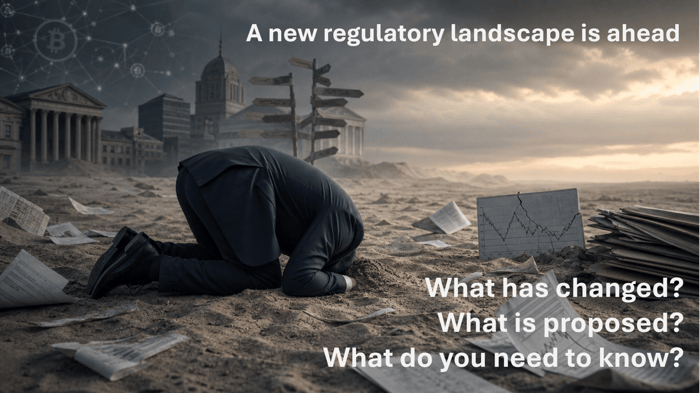
The main objective of this NASAA-approved provider of 2026 Ethics and Professional Responsibility IAR CE classes is to help RIA owners and IARs understand how changing regulations, inconsistent oversight, and widening gaps in investor protections are affecting their fiduciary responsibilities. Registered investment advisers and investment adviser representatives are confronting a difficult reality: Regulatory uncertainty does not reduce their fiduciary obligations. It increases the work required to satisfy fiduciary duties. Advisers can stick their heads in the sand but these developments are in motion. This class helps you understand what has changed, what is being proposed, and what regulators, courts, and legislators are doing right now. Ignoring the changes may feel easier. It is unlikely to be a strong defense if an investment recommendation is later questioned.
What Are the Most Important RIA Regulatory Risks in 2026?
The most important RIA regulatory risks in 2026 include uncertain investor protections, inconsistent regulation of similar financial activities, opaque private-credit valuations, changing public-company disclosure requirements, cryptocurrency market-structure gaps, and jurisdictional disputes between federal and state regulators. That is the main point of this 2026 Ethics and Professional Responsibility IAR CE class.
| Regulatory Issue | Potential Investor Risk | RIA or IAR Response |
|---|---|---|
| Prediction markets and federal preemption | Unclear state and federal protections and uncertain investor remedies | Identify the applicable regulator and document unresolved jurisdictional risks |
| Crypto and decentralized finance | Exchange-like activities may operate without exchange-like protections | Analyze the activity’s economic function, conflicts, controls, and investor remedies |
| Private credit | Opaque valuations, weak underwriting, illiquidity, and hidden leverage | Scrutinize valuation methods, assumptions, fees, leverage, liquidity, and defaults |
| Semiannual corporate reporting | Greater information asymmetry and slower recognition of financial deterioration | Increase monitoring and account for older public information in investment decisions |
| Reduced regulatory capacity | Less examination, enforcement, guidance, and early detection of misconduct | Perform more independent due diligence and retain stronger documentation |
Regulatory Uncertainty Increases an Adviser’s Responsibilities
When established protections are uncertain, weakened, or withdrawn, advisers may need to perform more due diligence—not less. It is counterintuitive, and it is a main objective of this 2026 ethics and professional responsibility IAR CE class.
IARs must determine whether an investment is appropriate for a client based on the investment’s actual characteristics and risks. That usually requires advisers to:
- Perform and document additional due diligence.
- Scrutinize valuations and the methods used to produce them.
- Evaluate actual and potential conflicts of interest.
- Confirm that required client disclosures are complete and timely.
- Evaluate the reliability of intermediaries and service providers.
- Monitor investments and conflicts on a recurring basis.
- Preserve documentation showing how conclusions were reached.
These responsibilities become particularly important when similar financial activities receive substantially different regulatory treatment because of their label, technology, or supervising regulator.
A product may be called a token, prediction contract, private-credit investment, or decentralized protocol. That label does not eliminate the adviser’s obligation to understand what the product does, how it is valued, who benefits from its sale, and what protections the client may lack.
Why So Many RIA Regulatory Risks Are Converging
RIA regulatory risk is rising because several important legal, market, and policy developments are occurring simultaneously while fiduciaries must continue making recommendations in real time.
Crypto legislation may preempt state authority while exempting certain decentralized-finance activities. The Commodity Futures Trading Commission is asserting federal authority over prediction markets. The Securities and Exchange Commission is reconsidering longstanding public-company reporting intervals. Private-credit growth is exposing weaknesses in underwriting, valuation, and adviser due diligence.
Meanwhile, regulators, courts, and state governments are contesting jurisdiction.
Advisers cannot place client decisions on hold until every jurisdictional dispute is resolved. They must evaluate risks using the information and protections that exist today while considering how pending changes could affect an investment tomorrow.
Regulatory awareness has consequently become part of practical fiduciary risk management, according to this 2026 Ethics and Professional Responsibility IAR CE class in which Advisors4Advisors editor Andrew Gluck interviews Tyler Gellasch of Healthy Markets Association.
Prediction Markets and Federal Preemption
One important conflict involves the CFTC’s effort to prevent states from regulating prediction markets, including situations involving state-level legal action. Prediction markets are an entirely new front on regulatory radar. Notably, this 2026 Ethics and Professional Responsibility IAR CE discusses the prediction markets in depth.
The immediate dispute may seem to be about whether a particular prediction product constitutes gambling, a regulated derivatives contract, or something else. The broader and much more important issue now arising is whether a federal agency can displace state authority and how unchecked agency power may affect federalism.
For an adviser, 2026 Ethics and Professional Responsibility IAR CE must extend beyond prediction markets. When federal and state regulators disagree, the resulting uncertainty may leave investors with unclear remedies and inconsistent protections.
An IAR considering an investment affected by such a dispute should identify the applicable regulator, determine which protections appear enforceable, and document any unresolved legal or jurisdictional risks.
Crypto Market Structure and Decentralized Finance
Decentralized (DeFi) platforms that perform functions resembling those of regulated securities exchanges may create exchange-like risks, even when the platforms use decentralized technology or different terminology.
DeFi is part of the new regulatory lexicon. If a DeFi platform, typically a blockchain technology, brings buyers and sellers together, facilitates trading, or gives certain participants informational or execution advantages, it may perform functions similar to those of a securities exchange or intermediary.
For a deeper treatment of these issues, see Tyler Gellasch's Crypto Investing Risks IAR CE class.
A principle of functional regulation is straightforward: Activities performing comparable financial functions should generally be subject to comparable investor protections. Rules against front-running, manipulation, and unfair dealing address harmful conduct regardless of whether it occurs through a traditional institution or an automated protocol.
For advisers, the essential questions include who controls the protocol, how transactions are executed, whether conflicts exist, what surveillance is performed, and what recourse investors possess when something goes wrong.
“Decentralized” should not be treated as a substitute for due diligence. Rather, it invite should further due diligence. Because if a defi investment backfires, investors will insist on it being accorded the same protections as securities. This is important to those searching for the best 2026 Ethics and Professional Responsibility IAR CE programs.
Private-Credit Opacity and Valuation Risks
Private credit presents a different but equally significant challenge.
Rapid growth has been accompanied by concerns about deteriorating underwriting standards, questionable loan valuations, and insufficient adviser due diligence. Failures involving Tricolor and First Brands, along with reports of government scrutiny involving private-credit valuations, illustrate the importance of examining how private assets are valued.
Unlike publicly traded securities, private-credit investments may not have observable market prices. Valuations can depend on models, assumptions, and information supplied by managers with an interest in the results.
Advisers evaluating private credit should understand the valuation methodology, test the reasonableness of important assumptions, and examine whether valuations affect management fees, performance compensation, redemptions, or new fundraising.
They should also document the investment’s liquidity limitations, underwriting standards, borrower concentration, leverage, and default risks.
Quarterly Versus Semiannual Public-Company Reporting
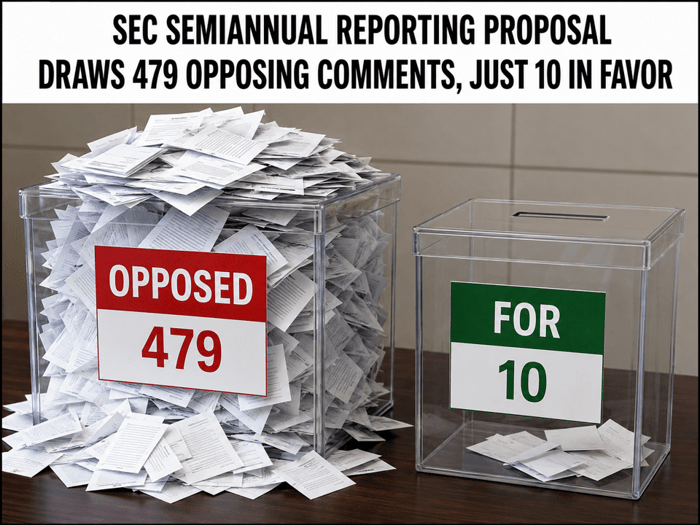
Proposals to permit public companies to replace quarterly reporting with semiannual reporting raise concerns about information asymmetry, price discovery, and fraud detection. The best 2026 Ethics and Professional Responsibility IAR CE programs are going to cover this issue extensively.
Less frequent reporting could leave ordinary investors relying on older information while corporate insiders and sophisticated market participants possess more current knowledge. For advisers, that information gap could complicate portfolio monitoring and the evaluation of whether a security remains appropriate.
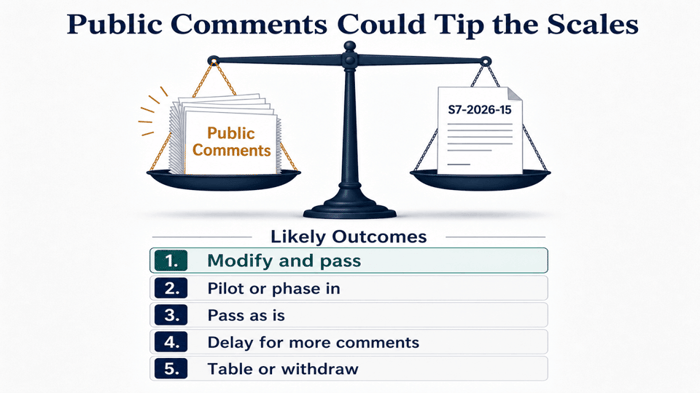
Public comments have strongly opposed reducing reporting frequency, with commenters frequently emphasizing investor protection, transparency, information asymmetry, fraud prevention, and market integrity.
The debate also demonstrates why professional participation matters. Advisers and investors can submit formal comments to the SEC instead of limiting their reactions to social media. Regulatory comment files create evidence that policymakers must consider.
SEC Institutional Capacity and Functioning Regulators
Effective investor protection depends on more than written rules. Regulators need experienced attorneys, accountants, economists, examiners, and other professionals capable of interpreting and enforcing those rules.
If agencies lose expertise or enforcement resources, advisers cannot assume their own obligations have diminished. Weaker regulatory oversight may shift more responsibility toward fiduciaries to recognize risks that regulators previously deterred, identified, or disclosed.
Advisers may therefore need stronger independent research, more detailed documentation, and more frequent monitoring when regulatory capacity or jurisdiction is uncertain.
What IARs Should Learn From an Approved 2026 Ethics And Professional Responsibility IAR CE Course
An approved 2026 Ethics and Professional Responsibility IAR CE course should help advisers connect regulatory developments to practical duties involving due diligence, conflicts, disclosures, valuation analysis, documentation, and continuing investment monitoring.
Understanding Soaring RIA Regulatory Risks is designed to help IARs make those connections.
The objective is not to predict the outcome of every legislative proposal, court case, or jurisdictional conflict. It is to help advisers recognize when regulatory change increases the need for inquiry, documentation, disclosure, and monitoring.
The key professional question is not simply, “Is this investment permitted?”
It is: “Have I understood the investment, its conflicts, its valuation, its regulatory gaps, and the consequences for my client?”
Advisers who ignore the changing environment may eventually need to explain why they failed to investigate visible risks. Advisers who stay informed are better prepared to ask the right questions, document reasonable conclusions, and protect clients when the regulatory landscape is shifting beneath them.
Sticking your head in the sand may temporarily block the view. It does not make the risks disappear.
FAQs
What is Understanding Soaring RIA Regulatory Risks?
Understanding Soaring RIA Regulatory Risks is an approved 2026 Ethics & Professional Responsibility IAR CE course focused on changing investor protections, cryptocurrency regulation, prediction markets, private-credit valuations, corporate disclosures, conflicts of interest, and adviser due diligence.
Why do regulatory gaps create additional risks for IARs?
Regulatory gaps may leave investors with fewer disclosures, uncertain legal remedies, inconsistent oversight, and less protection from conflicts or misconduct. Advisers may need additional investigation, documentation, disclosure, and monitoring to address those risks.
What should an adviser document when evaluating a higher-risk investment?
An adviser should document the investment’s structure, valuation, liquidity, leverage, conflicts, disclosures, regulatory status, investor protections, due-diligence sources, suitability considerations, and continuing monitoring procedures.
Does regulatory uncertainty reduce an investment adviser’s fiduciary duty?
No. Regulatory uncertainty does not eliminate an adviser’s fiduciary obligations. When established investor protections are uncertain or being withdrawn, the adviser may need to conduct more independent due diligence and retain more documentation.
Why is private credit a regulatory concern for RIAs?
Private-credit investments can involve limited price transparency, subjective valuations, illiquidity, leverage, deteriorating underwriting standards, and conflicts tied to management fees or reported performance. These characteristics can require enhanced adviser scrutiny.
What is functional regulation?
Functional regulation is the principle that financial activities performing similar economic functions should generally be subject to similar rules and investor protections, regardless of the technology, terminology, or regulator associated with the activity.