
Table of Contents
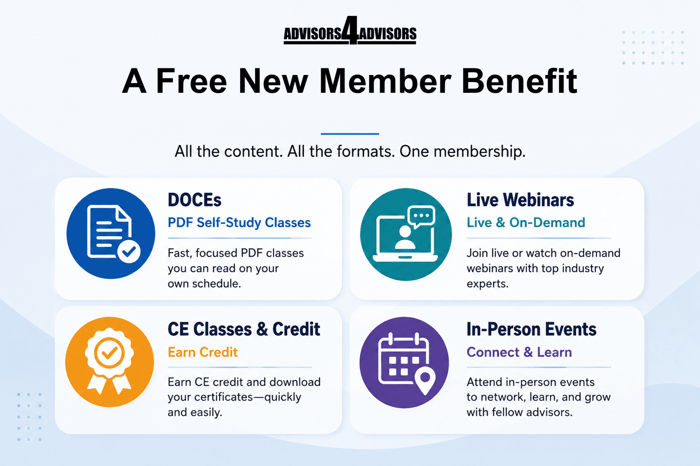
Advisors4Advisors has added a new member benefit offering continuing education that is delivered as self-study classes documents optimized for continuing education,® or DOCEs.® A DOCE® is a PDF-based class you read. It is expressly design for professional education. It's not passive viewing like a webinar and helps advisors earn twice the credit for of a webinar. It's not a new delivery method. But it is a new form of self study. It's a new, fast way to get IAR CE.
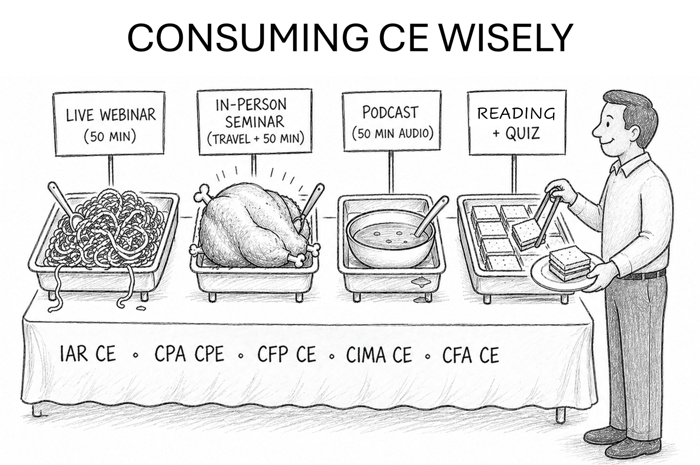
Time is a precious and limited resource. Webinars require a fixed time, an uninterrupted screen, and often more than the 50 minutes required for one credit. In contrast, DOCEs let practitioners study focused material in a more efficient format, enabling deep diving into subjects that deserve more than one class.
Because everyone learns differently and from different combinations of media, A4A provides CE in many forms: live events, self-study video, audio, and transcripts, and now we're formatting documents for easy skimming and learning from an open-book test.
This new benefit is delivering the best way to get IAR CE and it's another reason to consider Advisors4Advisors membership.
What is a fast way to get IAR CE?
A fast way to get IAR CE is to use Advisors4Advisors DOCEs—self-study PDF classes built for efficient continuing education. DOCEs help advisors earn credit while learning practical fiduciary skills, including how to advise neurodivergent clients, apply investor personality insights, and improve client follow-through.
Why advisors use DOCEs:
| Benefit | Why it matters |
|---|---|
| PDF self-study | Read on your own schedule instead of waiting for a webinar |
| Practical topics | Learn about neurodivergence, investor personality, and fiduciary communication |
| Efficient CE | A faster, focused way to earn credit and improve client service |
| Member value | A4A members get access to DOCEs, webinars, transcripts, CE classes, and other formats |
For advisors who prefer reading to watching, DOCEs® may be the fastest way to get IAR CE from A4A while still getting deeper, practice-ready education.
A fast way to get IAR CE and deeper learning experience
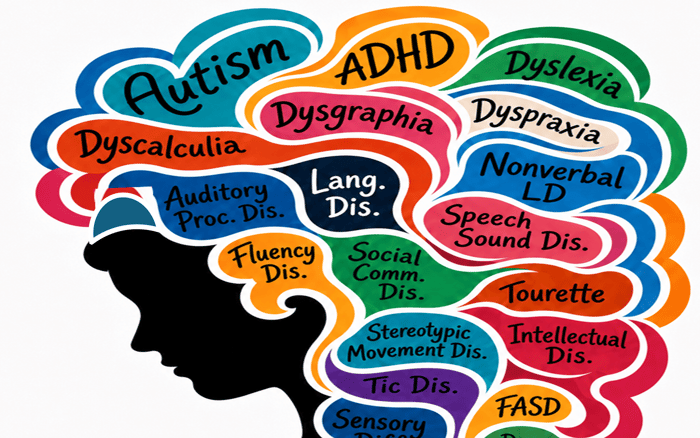
The new classes cover topics unlikely to be taught with this degree of practice-level specificity by many professional education providers. Two classes address financial advising amid growing neurodivergence, such as autism and ADHD. A third class applies financial psychology and investor personality traits to fiduciary practice, giving advisors 10 practical tips for better client communication, behavioral risk management, and implementation discipline.
The neurodivergence curriculum emphasizes a crucial distinction: advisors are not being asked to diagnose clients. They are being trained to adapt the advice process so clients can understand, retain, and act on recommendations. The material focuses on communication, dignity, informed decision-making, and follow-through. The fastest way to get IAR CE should not mean shallow CE. In this case, efficiency is paired with practical depth on a topic affecting more and more American families.
A4A’s DOCE format also allows advisors to pause, reread, underline, and return to material as needed. That is a natural fit for topics that are complex and human, not merely technical. A live webinar may move past an idea before an advisor has time to connect it to a real client. A DOCE invites you to stop to think, thus, making immediate translation of good ideas into practice.
Why neurodivergence classes
The neurodivergence classes are especially timely because many advisors already work with clients who process information differently, whether or not those clients use a label or have a diagnosis. The DOCEs focus on functional relevance: what communication methods work, what meeting conditions create overload, and what follow-up steps help the client act.
For example, one practice tip is to use agendas to reduce uncertainty. An agenda tells the client what will happen and where decisions may arise. Instructor Frank Murtha, Ph.D., funder of the Financial Counseling Institute, also cautions against rigid time limits; a time-boxed agenda can create pressure rather than clarity, Dr, Murtha says. This is the kind of detail that makes the class more useful than general awareness training.
The same practical approach applies to meetings. Advisors are encouraged to preserve decision energy by limiting the number of topics, staging complex decisions, using calmer environments, reducing visual clutter in online meetings, and ending with a clear recap. That makes the DOCE more than a fast way to get IAR CE. It becomes a workflow improvement tool for client meetings.
The material also shows why “yes” is not always enough. Clients may agree because they are tired, polite, embarrassed, or masking confusion. Restatement is a stronger safeguard. An advisor can say, “I want to make sure I explained this clearly. Tell me what you understand the next step to be.” That simple shift reveals misunderstanding before it becomes failed implementation.
Tips on using investor personality traits in advising
The investor personality class expands the same client-centered theme. Many advisory relationships begin with assets, liabilities, goals, insurance, tax issues, and risk tolerance. Those facts matter, but they do not fully explain how a client behaves under stress. Dr. Frank Murtha’s framework argues that investor identity is psychological as well as financial. Clients bring values, beliefs, fears, weaknesses, communication styles, and emotional tendencies into every decision.
This class turns that insight into practice tips. Advisors learn to observe behavior, not just answers; to map goals, values, needs, weaknesses, beliefs, and personality; and to anticipate how clients may react when markets fall or uncertainty rises. A technically appropriate portfolio can still fail if a client emotionally abandons it. For an advisor looking for a fast way to get IAR CE, this is valuable because the content connects directly to better client retention and plan execution.
The class also applies the Big Five personality model to advisory practice. Conscientiousness can affect follow-through. Neuroticism can shape reactions to uncertainty. Extraversion can influence communication style. Openness can affect willingness to change. Agreeableness can affect trust and collaboration. Advisors are not asked to turn into psychologists. They are asked to notice patterns and adapt communication, process, and guardrails accordingly. The 10 practice tips:
High-anxiety clients may need steadier communication and fewer surprises. |
Low-conscientiousness clients may need simplified steps, automation, and reminders. |
Highly skeptical clients may need logic, evidence, and a collaborative review of assumptions. |
Impulsive clients may need waiting periods before major decisions. |
Indecisive clients may need fewer options and clearer deadlines. |
Ultra-competitive clients may need performance conversations redirected toward personal goals rather than peer comparisons. |
How DOCEs add value to Advisors4Advisors membership
DOCEs are PDFs built to deliver continuing education efficiently by organizing the lesson around reading, comprehension, and application. That makes them a fast way to get IAR CE for advisors who prefer reading to watching, who want to twice the credit for their time, or who require flexibility during a busy workday.
The member benefit is also broader than three classes. Advisors4Advisors membership gives practitioners access to all A4A content in all formats. That matters because different learning needs call for different delivery methods. A webinar may be ideal for live discussion. A transcript may be helpful for review. A DOCE may be the most efficient format for focused credit. For advisors managing compliance around client work, a fast way to get IAR CE means the education fits the practices day instead of consuming it.
The new DOCEs also strengthen the professional value of the A4A library. They address problems advisors face in real relationships: clients who miss steps, resist change, act too quickly, mask confusion, misread risk, or need communication adjusted to their processing style. In other words, the new content is not abstract. It is built around the advisory problems that often determine whether advice is implemented.
For members, the practical payoff is simple: more useful education, more flexible access, and more credit opportunities. For nonmembers, the new benefit is a reason to look again at A4A. The fastest way to get IAR CE is not merely the shortest path to a certificate. It is the path that helps advisors meet requirements while improving the work they do with clients.
Advisors are facing more complexity in client behavior, communication, and fiduciary expectations. Education needs to keep pace. These new DOCEs help advisors learn about neurodivergence, personality, and financial psychology in a format built for speed, depth, and usefulness. That combination makes A4A’s newest member benefit a fast way to get IAR CE—and a smarter way to turn continuing education into better fiduciary practice.
Source grounding: The neurodivergence sections are based on the DOCE’s emphasis on practical advisor adaptations, communication, dignity, informed decision-making, agendas, restatement, environment, and execution. The investor-personality sections are based on the DOCE’s framework for investor identity, Big Five traits, behavioral risk, and personality-aware fiduciary practice.
FAQs
What new benefits did Advisors4Advisors add?
Advisors4Advisors added three new self-study classes delivered as Documents Optimized for Continuing Education, or DOCEs. Two classes focus on financial advising amid growing neurodivergence, including autism and ADHD. A third class applies financial psychology and investor personality traits to fiduciary practice.
What is a DOCE?
A DOCE is a PDF-based continuing education class. Instead of attending a scheduled webinar, advisors read a focused professional education document designed to deliver CE efficiently. For advisors who prefer reading, a DOCE can be a fast way to get IAR CE while still studying a topic in practical depth.
Why are DOCEs a fast way to get IAR CE?
DOCEs are built for efficient self-study. Advisors can read, pause, review, and complete the material without being tied to a webinar schedule. That flexibility makes DOCEs especially useful for busy practitioners who need CE but also want education they can apply in real client conversations.
Is this the fastest way to get IAR CE from Advisors4Advisors?
For many advisors, DOCEs may be the fastest way to get IAR CE because they reduce the time and scheduling friction associated with webinars. The larger benefit is that speed does not require sacrificing relevance. These classes address real advisory issues, including client communication, neurodivergence, investor personality, behavioral risk, and fiduciary implementation.
Why do the neurodivergence classes matter for financial advisors?
The neurodivergence classes help advisors adapt the advice process for clients who may process information, uncertainty, meetings, and follow-up differently. The goal is not to diagnose clients. The goal is to communicate clearly, reduce ambiguity, verify understanding, and make recommendations easier to implement.
How does the investor personality class help fiduciaries?
The investor personality class helps advisors understand how values, beliefs, fears, emotional tendencies, and communication styles affect financial decisions. A technically sound plan can still fail if the client cannot emotionally execute it. By learning to recognize personality traits and behavioral risks, fiduciaries can build advice processes that clients are more likely to follow.
Do DOCEs replace A4A webinars?
No. DOCEs add another way to learn. Advisors4Advisors membership gives practitioners access to A4A content in multiple formats, so advisors can choose the format that fits the topic, the schedule, and the way they prefer to learn.
Who should use A4A DOCE classes?
A4A DOCE classes are useful for IARs, fiduciaries, financial planners, and advisors who want practical continuing education. They are especially valuable for advisors who want CE that goes beyond technical rules and addresses how clients actually understand, resist, accept, and implement advice.