
Table of Contents
- NASAA IAR Ethics CE Regulatory Updates Matter Now
- Federal–State Tension and the Role of State Regulators
- State Preemption Risk Explained in Live IAR Ethics CE
- From Regulatory News to Continuing Education
- AI, Crypto, and Regulatory Asymmetry
- Structural Change and Fiduciary Application
- How This NASAA IAR Ethics CE Regulatory Update Differs
- When A Live Format Matters
- A Period of Regulatory Inflection
- Register for the February 25 NASAA IAR Ethics CE Live Class
- FAQs
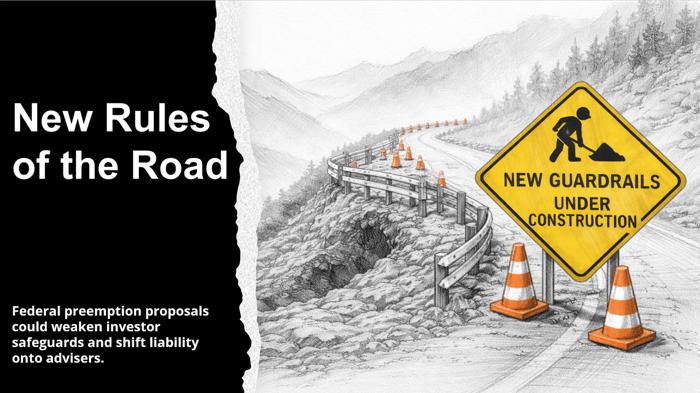
Financial regulatory guardrails are in the midst of relocation and reconstruction. Court decisions have rewritten financial regulatory enforcement, redefining federal authority. Congress is considering preempting state securities oversight of AI, crypto, and private investments. Meanwhile. artificial intelligence is accelerating advisory workflows. Crypto and tokenization are being commercialized, exposing U.S. retirement investors to risks never experienced before. This article provides the context for understanding Advisors4Advisors latest NASAA IAR Ethics CE regulatory update on state preemption risk.
NASAA IAR Ethics CE Regulatory Updates Matter Now
A NASAA IAR CE model rule now effective in 23 states establishes mandatory minimum education requirements for investment adviser representatives: six hours of Ethics/Professional Responsibility and six hours of Products & Practice annually. While nominally setting rules for state registered investment adviser representatives, NASAA's model CE rule also effectively sets a minimum standard for calling yourself a financial professional.
This IAR Ethics CE update addresses a regulatory architecture in motion encompassing recent developments, including:
The Supreme Court’s decision in SEC v. Jarkesy altered aspects of administrative enforcement authority.
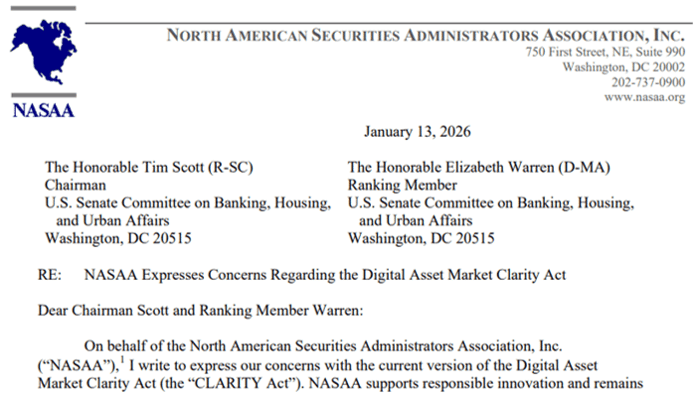
Legislative proposals seek to preempt state-level securities oversight in areas including digital assets.
AI is reshaping advisory operations and information asymmetry.
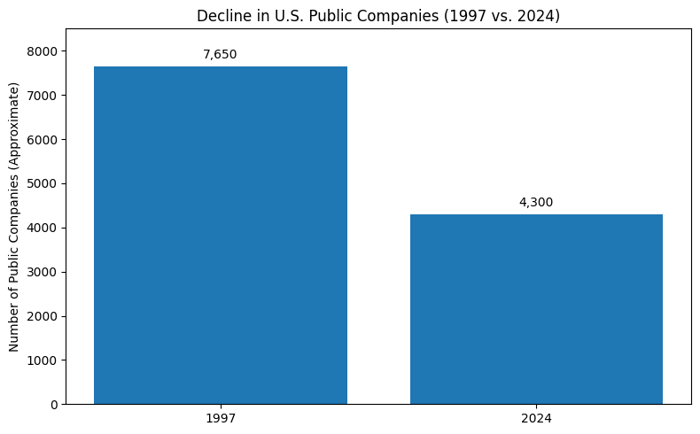
Private markets and alternative investments continue to expand relative to public markets.
These are recent but real issues, influencing an IAR's investment due diligence, enforcement, disclosures, and client communication. This NASAA IAR Ethics CE regulatory update addresses the new reality.
Federal–State Tension and the Role of State Regulators
The United States operates under a layered securities oversight system. State securities regulators, coordinated through the North American Securities Administrators Association, oversee licensing, offering review, and enforcement at the state level. Federal regulators oversee national markets and exchanges.
Recent proposals to preempt state authority would alter this balance, which has prevailed during the last century of American economic growth.
If oversight layers are consolidated or reduced:
Consumer protections will be diminished.
Local enforcement responsiveness may change.
Background vetting expectations may evolve.
Retail investor recourse could narrow in certain contexts.
For fiduciaries, that means the regulatory environment underlying recommendations may not remain static.
An IAR Ethics CE regulatory risk discussion that examines these shifts is not political. It is structural. It asks how fiduciary duty operates when oversight architecture is moved.
State Preemption Risk Explained in Live IAR Ethics CE
On February 25 at 4:00 p.m. ET, A4A is sponsoring a live NASAA IAR Ethics CE class examining state preemption risk and its implications for fiduciaries, including:
The historical role of state securities regulation.
The dual-layer federal–state oversight model.
Current legislative efforts affecting state authority.
The implications for private placements, digital assets, and alternative investments.
How fiduciaries should respond if oversight layers change.
This NASAA IAR CE series of live webinars treats regulatory change as an ethics topic because structural shifts alter fiduciary risk.
👉 Register for NASAA Preemption Risk Explained – Live Feb 25 at 4 ET.
The class is also available anytime on-demand for NASAA IAR Ethics CE credit. On demand makes classes available to financial advisors to skim anytime. To be clear, the Advisors4Advisors learning management system makes it easy to skim a course for its highlights without watching the entire class. This comes in handy after a live course, when you need to prepare for a client meeting, give a speech, or discuss recent developments with your firm's staff. Moreover, you can download the transcript from the classes and use the text in your client communications.
From Regulatory News to Continuing Education
Advisors4Advisors CE is unique because it treats financial news as continuing education. Advisors4Advisors NASAA IAR Ethics CE regulatory updates apply a historical lens to current events, to offer analysis on issues including:
enforcement changes following major court rulings
Federal–state authority issues
AI-driven operational change
crypto commercialization and tokenization
private market expansion and opacity
market drawdowns and investor panic dynamics
Classes are long form journalism covering news affecting client financial planning outcomes. The content is designed to provide financial planners with in-depth evidence-backed analysis delivered in video and text formats and bundled in a NASAA IAR CE package.
The approach reflects a key premise: fiduciary duty does not exist in a vacuum. It operates within a regulatory and market structure that whipsawed investors repeatedly for the last decade.
AI, Crypto, and Regulatory Asymmetry
The advisory profession is operating in an accelerated intelligence environment. The rapid commercialization of generative AI that began in 2022 -- only three years ago -- has compressed research cycles, altered documentation practices, and reshaped client expectations. At the same time:
Crypto-linked products are being integrated into mainstream platforms.
Tokenized assets are being sold alongside traditional securities.
Stablecoin and digital asset legislation continues to develop.
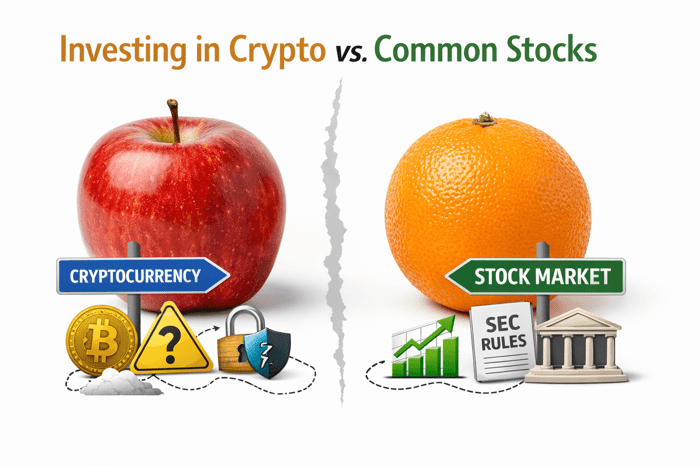
Most decentralized crypto assets lack a buyer-of-last-resort, common in public securities.
Regulatory parity for crypto with securities is being debated right now, and fiduciaries must reassess not only investment risk, but changes to structural risks due to regulatory changes. This IAR Ethics CE regulatory update examines these dynamics to help advisors:
Reevaluate diligence standards.
Clarify disclosure despite regulatory asymmetry.
Document context in recommendations.
Communicate uncertainty responsibly.
Structural Change and Fiduciary Application
Ethics is not limited to conflict management. It includes prudence in context.
When enforcement pathways change, fiduciaries may need to:
Increase independent verification.
Adjust assumptions about deterrence.
Scrutinize disclosure in lightly regulated offerings.
Reassess recommendations tied to emerging asset classes.
When state oversight is potentially reduced, fiduciaries may need to incorporate that shift into their analysis of private placements or alternative investments.
Because this class on NASAA IAR Ethics CE regulatory risk connects macro structural change to a fiduciary's ethical obligation, it profoundly strengthens professional judgment.
How This NASAA IAR Ethics CE Regulatory Update Differs
| Focus Area | Static Ethics Review | A4A Regulatory Update Approach |
|---|---|---|
| Regulatory Context | General fiduciary rules | Enforcement and oversight shifts |
| Market Environment | Hypothetical scenarios | Live developments |
| Asset Coverage | Traditional securities | Digital assets, private markets, AI |
| Application | Abstract principles | Direct fiduciary implications |
| Format | Pre-recorded recap | Live analysis with on-demand access |
The distinction is not stylistic. It is contextual.
When regulatory architecture shifts, ethics education should reflect the shift.
When A Live Format Matters
NASAA IAR Ethics CE live classes create immediacy. They allow advisors to evaluate developments as they unfold and consider questions in real time.
The accompanying NASAA IAR Ethics CE on-demand version enables accessibility, while the live format reinforces that continuing education can be timely and entertaining for its unpredictability and the spontaneity of answers instructors give to advisor questions.
A live CE format matters most in pivotal moments. The first webinar I conducted was the week Lehman Bros. collapsed in October 2008. That live class inspired the start the Financial Crisis Webinar Series, live CE webinar series that continues to this day. Since then, A4A has produced breaking news webinars from Brexit through every 10% correction in the S&P 500 index along the way to the longest bull market in modern history, all the moments when bringing together hundreds of advisors for live classes mattered.
A Period of Regulatory Inflection
This IAR Ethics CE regulatory update comes at a moment when advisors are operating in a period characterized by:
Judicial scrutiny of administrative enforcement.
Federal–state authority debates.
AI-driven acceleration of advisory tools.
Crypto, tokenization are being commercialized.
Expansion of private markets relative to public markets.
These forces are all in the process of converging right now.
As guardrails are reconstructed and relocated, fiduciaries must also recalibrate.
NASAA IAR Ethics CE regulatory updates from Advisors4Advisors treat these developments as central—not peripheral—in helping advisors fulfill their duty of care and loyalty in context.
Register for the February 25 NASAA IAR Ethics CE Live Class
If you are seeking a NASAA IAR Ethics CE regulatory update that addresses structural change rather than recycled hypotheticals, the February 25 session provides that forum.
👉 NASAA Preemption Risk Explained – Live Feb 25 at 4 ET
(Insert active link.)
Continuing education should reflect the environment in which fiduciaries operate. When markets and regulatory architecture shift, ethics education should shift with them.
That is the standard applied in A4A’s NASAA IAR Ethics CE regulatory update programs.
FAQs
What is a NASAA IAR Ethics CE regulatory update?
A NASAA IAR Ethics CE regulatory update is a continuing education session that analyzes current regulatory developments—such as enforcement shifts, federal–state tension, AI acceleration, and crypto commercialization—and explains their fiduciary implications for investment adviser representatives.
Why does a NASAA IAR Ethics CE regulatory update matter now?
It matters because regulatory architecture is shifting. Court decisions, legislative proposals, and technological change are altering enforcement, oversight, and risk assumptions for fiduciaries.
What are the NASAA IAR CE annual requirements?
The NASAA IAR CE model rule requires 12 hours annually in participating states: six hours of Ethics/Professional Responsibility and six hours of Products & Practice.
What is state preemption risk in securities regulation?
State preemption risk refers to proposals that would limit or override state securities authority, potentially changing the long-standing dual-layer federal–state oversight model.
How does federal–state tension affect IAR Ethics CE regulatory risk?
Federal–state tension affects fiduciary risk because oversight layers influence registration review, enforcement responsiveness, and investor recourse.
How did SEC v. Jarkesy affect securities enforcement?
The Supreme Court’s decision in SEC v. Jarkesy altered aspects of administrative enforcement authority, prompting reassessment of deterrence and enforcement assumptions.
Why are AI and crypto included in a NASAA IAR Ethics CE regulatory update?
AI and crypto are included because they alter operational practices, liquidity structures, and regulatory parity assumptions, which directly affect fiduciary analysis.
Do decentralized crypto assets have a buyer of last resort?
Most decentralized crypto assets lack a formal buyer-of-last-resort structure comparable to traditional securities markets, affecting liquidity expectations in stressed conditions.
What is regulatory asymmetry in crypto markets?
Regulatory asymmetry refers to differences in oversight, disclosure, enforcement, and liquidity support between traditional securities markets and certain decentralized digital asset markets.
How does private market expansion affect IAR Ethics CE regulatory risk?
Private market growth increases reliance on disclosure and due diligence where oversight may differ from public securities markets.
What makes this NASAA IAR Ethics CE live class different?
This NASAA IAR Ethics CE live class connects structural regulatory change directly to fiduciary duty rather than relying on static ethics hypotheticals.
What is a NASAA IAR CE live webinar?
A NASAA IAR CE live webinar is an interactive online continuing education session that satisfies NASAA IAR CE requirements while addressing current regulatory developments in real time.
Is there a NASAA IAR Ethics CE on-demand option?
Yes. The NASAA IAR Ethics CE on-demand version allows advisors to review the regulatory update at any time and revisit key segments as needed.
Can advisors download materials from the NASAA IAR Ethics CE on-demand class?
Yes. Advisors can download transcripts to prepare for client meetings, internal discussions, or documentation purposes.
How does this IAR Ethics CE update support fiduciary duty?
It supports fiduciary duty by helping advisors reassess diligence standards, refine disclosures, document regulatory context, and communicate uncertainty responsibly.
Is a NASAA IAR Ethics CE regulatory update political?
No. A NASAA IAR Ethics CE regulatory update analyzes structural regulatory changes and their fiduciary implications without political framing.
Why does live format matter for regulatory updates?
Live format allows advisors to evaluate regulatory developments as they unfold and ask questions in real time.
Does this NASAA IAR Ethics CE regulatory update apply only to state-registered IARs?
While designed for state-registered IARs, the structural issues discussed may affect financial professionals operating in evolving regulatory environments.
How does enforcement architecture influence fiduciary risk?
Changes in enforcement architecture can affect deterrence assumptions, oversight intensity, and the need for independent verification.
Where can advisors register for the NASAA IAR CE live webinar?
Advisors can register for the NASAA Preemption Risk Explained – Live Feb 25 at 4 ET through Advisors4Advisors and access the NASAA IAR Ethics CE on-demand version afterward.