
Table of Contents
- A structural gap between IAR CE and productivity
- Strategically Choosing CE Programs That Drive Financial Advisor Productivity
- Nearly 200,000 IARs under NASAA IAR CE model rule
- Prometric’s role—and Foley’s position within it
- Helping stand up the system: Early-stage execution under pressure
- A direct account: Three years inside the system
- Creating IAR CE about financial advisor productivity
- Regulators generally don't recommend vendors, but...
- Reframing CE selection with a financial advisor productivity lens
- IAR CE and financial advisor productivity
- Conclusion: A system builder teaching how to use the system better
- FAQs about IAR CE and financial advisor productivity
- What is the connection between IAR CE and productivity?
- How can IAR CE increase financial advisor productivity?
- Why should advisors focus on IAR CE and financial advisor productivity?
- How do advisors choose IAR CE that improves financial advisor productivity?
- What types of IAR CE courses improve financial advisor productivity?
- FAQs
After Helping Stand Up IAR CE for Half of U.S. IARs, He’s Improving IAR Productivity
When Dr. Shawn Foley debuts on Advisors4Advisors (A4A) on March 25, he will do so by teaching a class focused on strategically linking financial advisor productivity and IAR CE. The moment marks the arrival of an education professional and productivity consultant who, in my experience as an IAR CE provider, played a pivotal operational role in helping stand up the IAR CE system during its formative first six years, from 2020 through 2025. For IAR CE providers navigating approvals, evolving rules, and year-end deadlines, Foley was the most visible and responsive individual associated with NASAA's IAR CE program.
A structural gap between IAR CE and productivity
The IAR CE framework, as established under the NASAA model rule, sets a minimum standard for calling yourself an investment fiduciary. IARs subject to the NASAA IAR CE model rule in 23 state states are required to complete 12 credits annually to maintain state registration. The requirement is clear. What is unknown is if IAR CE improves how IARs work. Does meeting annual IAR CE requirements boost financial advisor productivity?
This gap—between completion of IAR CE sessions and financial advisor productivity—is addressed strategically in Dr. Foley's one CE credit/hour webinar.
In practice, IAR CE, as well as CE and CPE meeting education standards for CFP, CIMA and CPA professionals, often is treated by practitioners as a compliance checkbox. But in today's more complex advisory environment—defined by rapid regulatory change, AI adoption, and expanding product sets—the question is, how can you use IAR CE and professional to change how you operate, to align CE choices and productivity strategically? This is addressed in Dr. Foley’s class, Strategically Choosing CE Programs That Drive Your Productivity.
Strategically Choosing CE Programs That Drive Financial Advisor Productivity |
Strategically choosing vs. just meeting the requirements |
How strategy improves your productivity |
What makes a good IAR CE class |
Action oriented learning objectives |
Turning LOs into productivity improvements |
Measuring CE impact on performance |
How IAR CE differs from education of medical professionals |
What to look for as CE evolves in the finance services industry |
Alternative education delivery methods -- podcasts, AI digital coaching, meetings with a colleague or coach, and company meetings as education events. |
Avoiding common pitfalls in IAR CE Strategically choosing vs. just meeting the requirements |
Nearly 200,000 IARs under NASAA IAR CE model rule
Before addressing the financial advisor productivity issue, it's important outline the NASAA IAR CE system Shawn Foley helped get off the ground and administer for six years.
The states' role in regulating RIAs with less than $100 million AUM, and their IARs, stems from the National Securities Markets Improvement Act of 1996 (NSMIA). In the years following NSMIA, a not for profit association representing state securities regulators, the North American Securities Administrators Association (NASAA), began contemplating development of an IAR CE model rule to establish a consistent baseline for adviser education across states. The rule became effective in three states in 2020 and spread too 23 states in 2026. .
The system now supports about 180,000 investment adviser representatives across adopting jurisdictions. It is a distributed regulatory framework implemented state-by-state but coordinated through a common structure, NASAA, which was established to facilitate securities regulators in Canada and Mexico, as as well as in the 50 U.S. states and territories in 1919.
NASAA operates with limited centralized resources relative to its scope. As a result, large-scale initiatives like IAR CE, depend on implementation partners and a small number of individuals ensuring the system functions in practice. To be clear, states that are perpetually fighting tight budgets have no choice but to develop regulatory initiatives slowly because they are thinly staffed and budgetarily constrained. From these weaknesses, NASAA derives its strengths.
Prometric’s role—and Foley’s position within it
Prometric, a global testing and assessment firm located in Baltimore, Maryland, near NASAA's Washington, D.C. headquarters, was engaged by the state regulators to help operationalize the IAR CE program starting in 2020—building the infrastructure for course delivery, provider interaction, and system administration in states across the nation.
Foley, a consultant to Premotric, became the primary point of contact for IAR CE providers. While he held no role within NASAA, he directed traffic at the intersection of regulators, vendors, and providers.
It was not an easy job! Based on the growth in the number of providers, Shawn handled applications for approval from 12 to 18 new providers annually, oversaw document management of the applications annually, reviewed their applications, coordinated team approvals of providers, and answered provider questions about the interface and rules. Foley did not tell me any of this. My estimates of his workload come from working with him and his team at Prometric.
While I learned of two other Prometric employees to whom Shawn reported, the firm did not seem to dedicate more people on IAR CE. On one or two occasions, Foley obtained answers to my questions directly from regulators assigned to a NASAA committee. He explained and invented procedures and supported the system, which was clumsy and depended on emails where an application would have been much better.
The number of IAR CE Providers increased by about 50% annually! These are my estimates based on public data. Shawn had to manage not only the 12 to 18 new applications from potential providers, but he also had to answer questions from a fast growing number of approved providers.
Each IAR CE provider that was approved by the Prometric and NASAA teams was required to submit applications for their instructors to teach live classes. In addition, applications must be submitted and approved for every new course. Moreover, course applications required measurable learning objectives. It was frighteningly clear, Shawn had the ability to determine if the LOs indeed were being achieved.
From the provider perspective, that distinction is critical. Policy defines the rules. People like Foley determine whether those rules can actually be implemented at scale.
Helping stand up the system: Early-stage execution under pressure
The launch of IAR CE was not a clean rollout. It was iterative. Rules were clarified in real time. Changes in the rules were announced once a year in an annual catalog but most rule changes were buried in the 60-page document. Systems were being used while still being refined. Providers were entering the system while learning how to operate within it.
The financial press and trade magazines were (and still remain) oblivious to the seismic in regulatory responsibility changes NASAA was engineering. As federal power in the SEC was set back by a Supreme Court decision, SEC policy became focused on encouraging capital formation instead of investor protection. The CFPB was effectively impotent by 2026. Charged with protecting investors, NASAA was left with more to be concerned about than perhaps ever before in their 106 year history.
Foley was part of a small team of two or three full-time personnel Prometric dedicated to supporting the IAR CE system. That meant working with providers applying for approval, interpreting evolving requirements, supporting system navigation, and managing ongoing operational questions at scale.
From a practical standpoint, he was a key contributor in standing up the system that enabled NASAA’s model rule to function for tens of thousands of registrants entering CE for the first time annually for six years. He was not running the program in title. But to IAR CE providers, he was the face of the system.
A direct account: Three years inside the system
My perspective on Foley comes from working inside that system for the past two and a half years as a CE provider. It comes from emailing him an average of once a week. Shawn responded immediately at least 80% of the time. That level of responsiveness is not typical in systems of this size and complexity. More important was how he responded. He never showed frustration. He was consistently informative, precise, and constructive.
I came to look forward to those interactions because they were productive. He brought clarity and a positive tone to what could otherwise be a bureaucratic process.
Creating IAR CE about financial advisor productivity
Foley is now transitioning from his role in building the IAR CE system to his longstanding interest in performance and productivity. His consulting firm, Foleyworks, focuses on productivity, workflow design, and organizational performance. Now, he's layering on knowledge of IAR CE. After spending years consulting on productivity and the last six years on IAR CE, this class presents the first opportunity to articulate how IAR CE can be used to boost financial advisor productivity.
Regulators generally don't recommend vendors, but...
Regulators keep a very low social profile online. They usually do not accept invitations to connect from people they do not already know. Nor do they often provide recommendations or endorsements of individuals or companies. However, The Director of Regulatory Systems & Services at NASAA, Natasha Hurt, in 2022, wrote this recommendation on LinkedIn for Shawn:
"Dr. Shawn Foley was instrumental in building and deploying our continuing education platform for U.S. based investment adviser representatives. He successfully managed the scope and design phases of the project, and quickly responded to emails and issues with outstanding professionalism. We would recommend FoleyWorks, and Shawn specifically, without reservation for any large scale project management initiatives."
This is a rare instance of a NASAA regulator making any exception to the rule.
Reframing CE selection with a financial advisor productivity lens
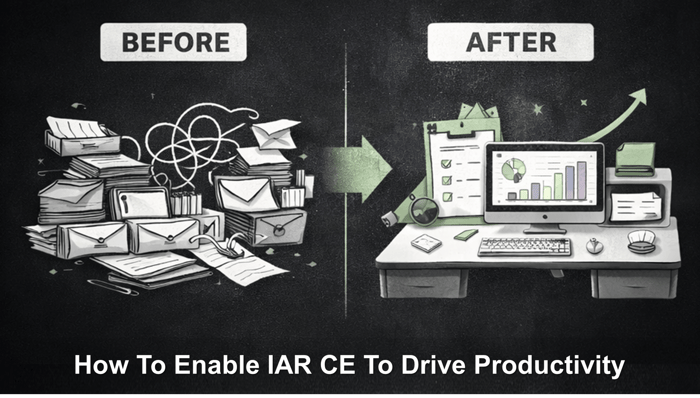
Dr. Foley’s approach reframes CE selection around outcomes—workflow integration, decision frameworks, efficiency, and communication clarity. These are not regulatory requirements, of course, but in practice they are highly relevant to financial advisor productivity.
IAR CE and financial advisor productivity
IAR CE is not required to improve financial advisor productivity.
Ditto for CFP CE, CIMA, CE, and CPA CPE.
However, Shawn Foley's class could set a new standard for making IAR CE drive greater financial advisor productivity.
Advisors4Advisors is honored to help a shift toward outcome-oriented CE.
Conclusion: A system builder teaching how to use the system better
IAR CE remains a minimum standard. But how advisers use it is changing.
Shawn Foley helped stand up the system that allows NASAA’s IAR CE framework to function at scale. Now, through his debut on A4A, he is focused on helping advisers use that system more effectively by using IAR CE to boost financial advisor prodctivity.
The implication is straightforward: CE is not only something to complete. It is something that can change how you work—if it is chosen and applied with intention.
FAQs about IAR CE and financial advisor productivity
What is the connection between IAR CE and productivity?
IAR CE and financial advisor productivity are connected when continuing education improves how advisers make decisions, manage workflows, and communicate with clients, rather than just meeting minimum requirements.
How can IAR CE increase financial advisor productivity?
IAR CE can increase financial advisor productivity when courses provide practical frameworks, tools, or workflows that reduce time spent on repetitive tasks and improve efficiency in daily operations.
Why should advisors focus on IAR CE and financial advisor productivity?
Focusing on IAR CE and financial advisor productivity helps turn required education into a business advantage by improving processes, client service, and decision-making efficiency.
How do advisors choose IAR CE that improves financial advisor productivity?
Advisors can choose IAR CE that improves financial advisor productivity by selecting courses that address real operational challenges, provide actionable frameworks, and align with their daily workflows.
What types of IAR CE courses improve financial advisor productivity?
Courses that focus on workflow design, communication frameworks, technology use, and decision processes are more likely to improve productivity than purely theoretical content.
FAQs
Can IAR CE be used strategically to improve financial advisor productivity?
Yes. IAR CE can be used strategically when advisers select courses that improve workflows, decision-making processes, and client communication rather than treating CE as a compliance requirement.
What is the biggest mistake advisors make with IAR CE and productivity?
The biggest mistake is treating IAR CE as a checkbox instead of selecting courses that directly improve how they operate, manage time, and serve clients.
How does IAR CE compare to CFP, CPA, and CIMA education in terms of productivity?
IAR CE, CFP CE, CPA CPE, and CIMA CE all set minimum standards, but none require productivity gains. Productivity improvements depend on how advisers apply what they learn.
Can better IAR CE choices reduce operational inefficiencies?
In some cases, yes. Choosing CE focused on systems, workflows, and communication can reduce inefficiencies by improving how recurring tasks are handled.
Why is IAR CE and productivity becoming more important for advisors?
IAR CE and productivity are becoming more important due to increasing regulatory complexity, rapid adoption of AI tools, and the need for advisers to operate more efficiently in competitive markets.